H-Phase / H-Block · Match structure
Recognizing when the game changes state.
BlueX studies phase boundaries, team structure, and pressure as time-linked football evidence rather than isolated labels.
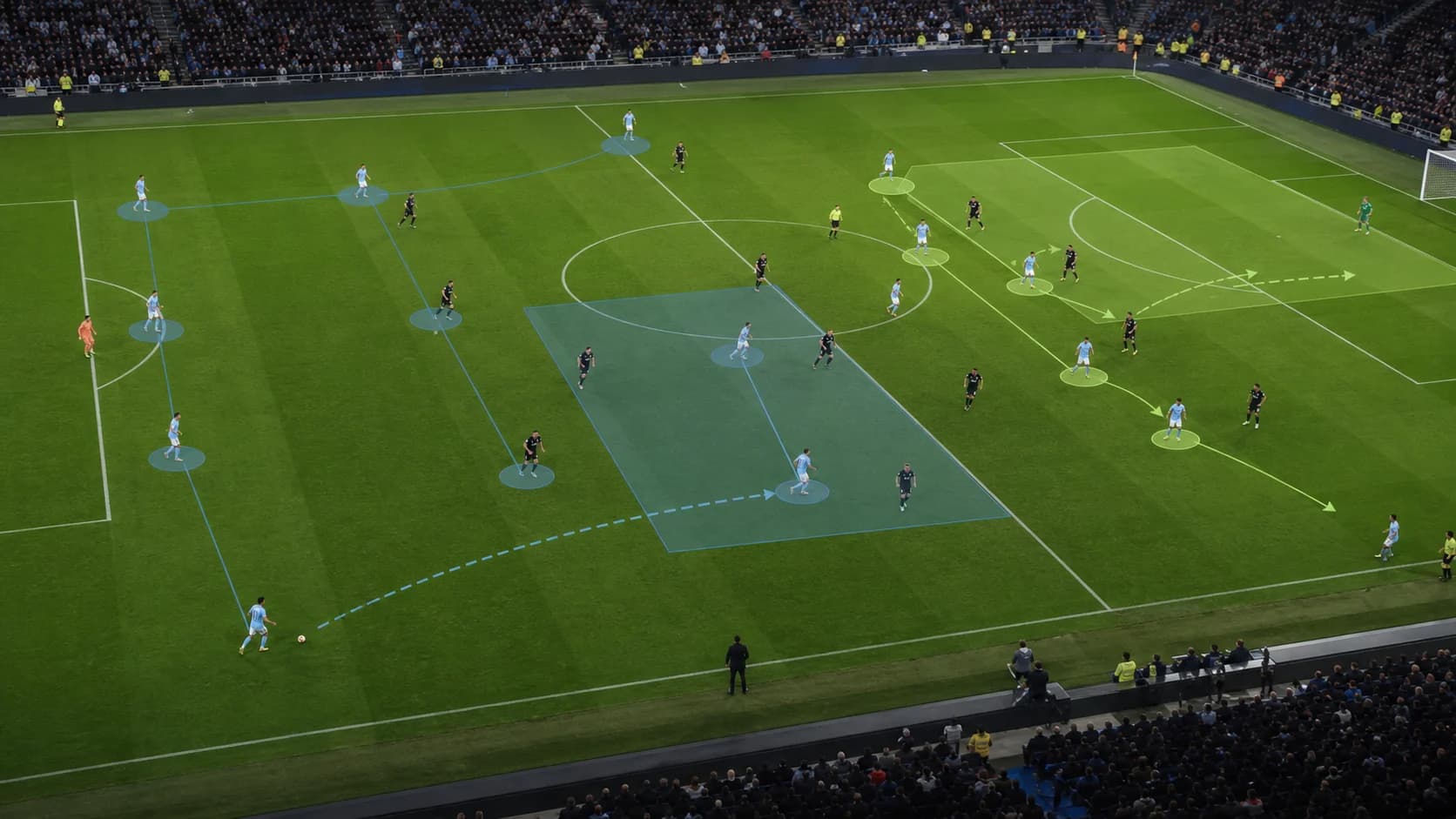
Research question
Where does one phase end, another begin, and what visible evidence supports the transition?
Why this matters
Study the behavior that changes the work.
The same player positions can mean different things before and after possession changes, restarts, pressure, or progression. Phase research must preserve the sequence that makes a state understandable.
Phase boundaries
Study the temporal evidence that distinguishes the setup, transition, continuation, and resolution of a phase of play.
Team structure
Connect synchronized participant observations to shape, pressure, and collective movement without turning a formation snapshot into the whole story.
Football language
Use governed football terminology so research outputs remain comparable across matches, analysts, and product workflows.
Validation principles
Evidence before a claim.
Phase-aware evidence lets analysts retrieve how a moment developed, not only where players happened to stand in one frame.
Review complete sequences and difficult boundary cases where several football interpretations appear visually similar.
Compare phase, structure, and pressure decisions against their source intervals rather than summary labels alone.
Preserve reviewer disagreement and taxonomy version so changed definitions do not overwrite earlier evidence.
Reading standard
Evidence stays attached.
Every phase claim remains linked to a reviewable source interval and governed football terminology.
A tactical interpretation is not promoted from coordinate patterns without supporting match context.
Research outputs expose confidence and review state wherever the match supports more than one reading.
Research to workflow
See the result on a real match.
A pilot shows how the research becomes reviewable evidence for analysts and coaches, with clear confidence and review states.