BlueX Off-ball Intelligence · Tactical behavior
Seeing the movement beyond the ball.
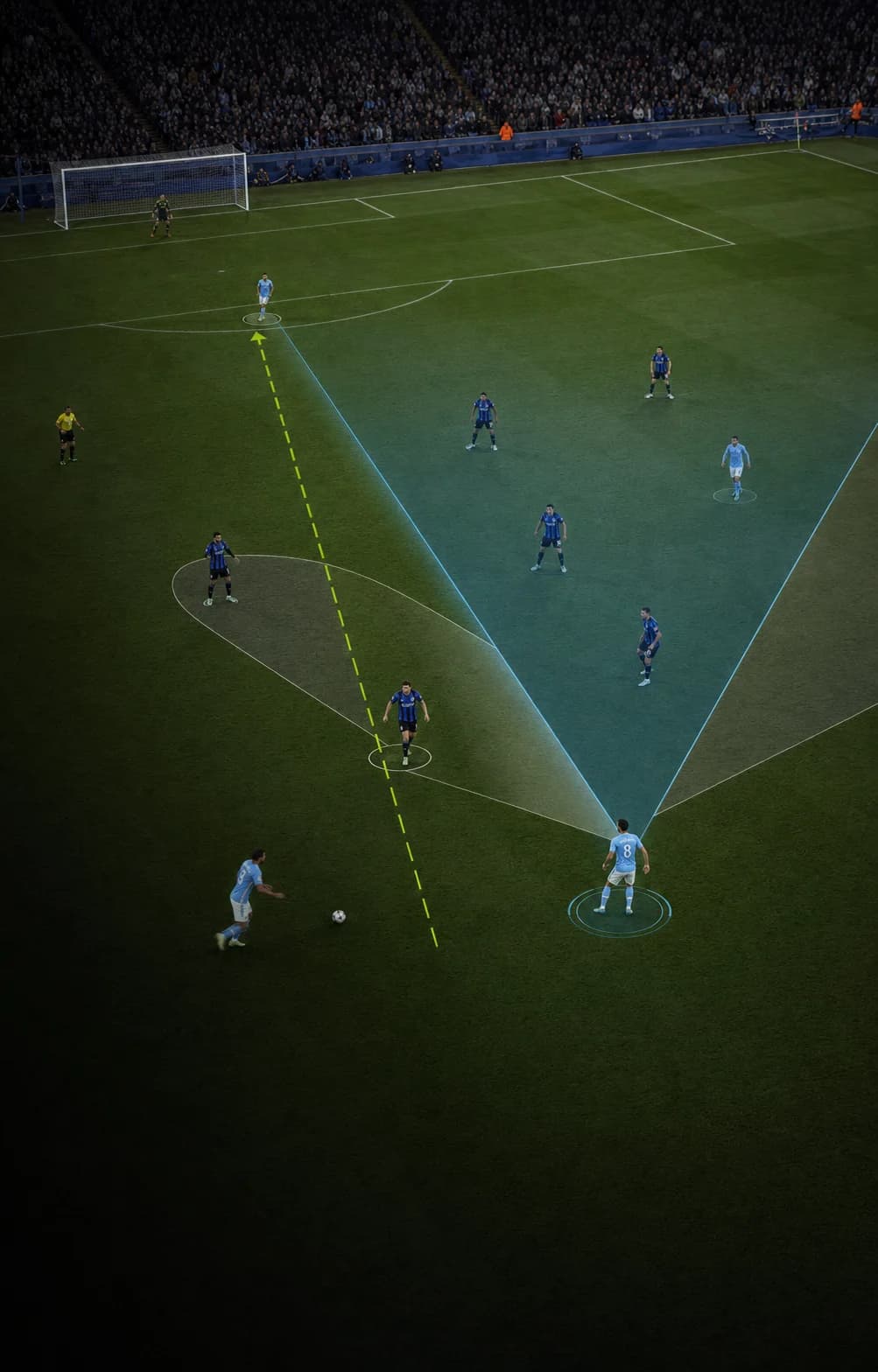
BlueX studies space creation, on-ball gravity, off-ball movement, and field of view as connected behavior before the decisive action.
Research question
Which movement created space, shifted pressure, or changed the receiver’s options before the decisive action?
Why this matters
Study the behavior that changes the work.
The event on the ball often records the outcome, while the cause develops elsewhere. Off-ball research must connect movement, visible options, pressure, and team response without claiming to read intention directly.
Space creation
Study how runs, rotations, and occupation change the space available to teammates and defenders over a sequence.
On-ball gravity
Observe how pressure and defensive attention move around the ball carrier and what opportunities that movement creates elsewhere.
Field of view
Examine visible options and reception context while keeping perception cues separate from unobservable intention.
Validation principles
Evidence before a claim.
Off-ball evidence gives coaches and analysts a way to review why space or pressure changed before the action that appears in the event log.
Review the setup, movement, visible response, and outcome as one sequence rather than grading only the final touch.
Compare alternative explanations and negative examples where similar movement did not create the same football effect.
Keep field-of-view and attention claims bounded to observable body and match context.
Reading standard
Evidence stays attached.
The system describes observable movement and response, not hidden player intention.
Space and attention claims remain linked to the relevant sequence, viewpoint, and supporting participants.
Analyst interpretation stays reviewable alongside the source video and alternative explanations.
Research to workflow
See the result on a real match.
A pilot shows how the research becomes reviewable evidence for analysts and coaches, with clear confidence and review states.